
Curtains do more than block light — they frame views, set mood, improve insulation and finish any interior design. Whether you’re refreshing your living room, choosing drapes for the bedroom, or picking practical window coverings for the bathroom, understanding curtain styles helps you make confident choices.
Why Curtain Styles Matter
Window treatments influence comfort, privacy, light control and the perceived scale of a room. The right curtain fabric and heading style can make ceilings look higher, soften harsh sunlight, reduce heat loss, and complete your home decor scheme. In short: curtains are functional design.
Quick fact: Well-fitted thermal or insulated curtains reduce heat transfer at windows and can improve comfort — the exact saving varies by fabric, lining and fit, but properly chosen drapery contributes to a more energy-efficient home.
Popular Curtain Styles and What They Do
Below are the most common curtain styles, how they look, and where they work best.
- Single Panel Curtains – One fabric panel that covers the whole window. Minimal, modern and good for small windows or sliding doors.
- Panel Pair / Double Panel Curtains – Two panels meeting in the middle. Classic for living rooms and dining rooms where you want even balance.
- Pinch Pleat Curtains – Tailored, formal pleats sewn into the heading; ideal for traditional or elegant interiors.
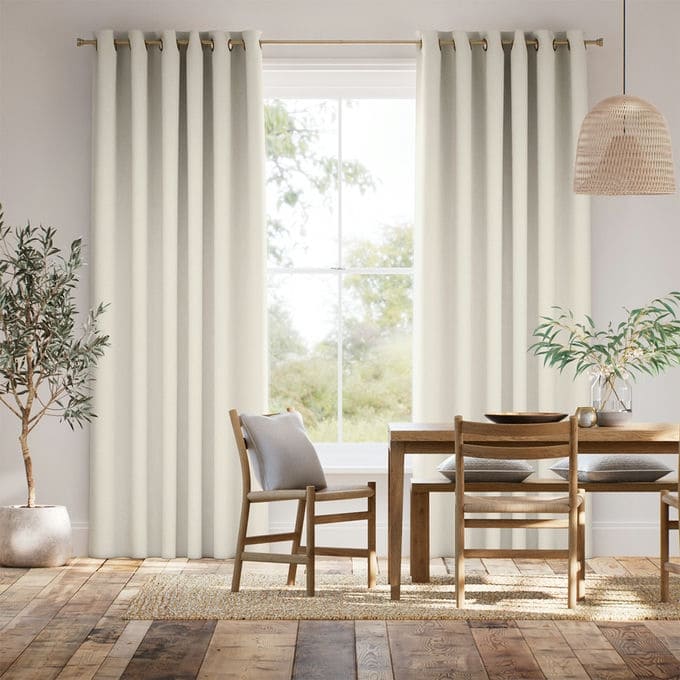
- Grommet / Eyelet Curtains – Metal rings in the heading for a contemporary ripple when hung on a curtain rod.
- Wave Fold / Ripple Fold – A modern, even wave that gives clean vertical lines and works well with track systems or grommet rods.
- Sheer Curtains – Lightweight, translucent fabrics that diffuse sunlight and add softness — perfect layered with heavier drapes.
- Blackout Curtains – Dense or lined fabrics designed to block light and improve privacy — ideal for bedrooms and media rooms.
- Thermal / Energy-Efficient Curtains – Heavier or insulated linings that increase insulation at the window and reduce drafts.
- Café Curtains – Short curtains that cover the lower half of a window — great for kitchens and bathrooms where privacy is needed but light should enter.
- Window Sill, Apron & Puddle Length – Variations in length: sill (ends at sill), apron (just below sill), floor-length (classic), and puddle (extra fabric pooled on floor) — choose by style and practicality.
How to Choose the Right Curtain Style (Room-by-Room)
Match the style to room function and aesthetic:
Living Room
- Choose flowing floor-length panels to add drama and height (layer sheer curtains with heavier drapes for flexibility).
- Grommet or wave fold styles give a contemporary look; pinch pleat suits a formal living room.
Bedroom
- Blackout curtains or lined pinch pleat curtains create sleep-friendly darkness and sound dampening.
- Consider motorized drapes for convenience in master suites.
Dining Rooms
- Pinch pleat drapery in luxe fabric elevates formality; avoid high-sheen fabrics near food prep.
Kitchen & Bathroom
- Café curtains and shorter, washable fabrics work best for kitchen windows where ventilation and quick cleaning are priorities.
- For bathrooms, use moisture-resistant materials or place curtains outside the reach of splashes. Sheers or vinyl-coated fabrics offer privacy without mildew concerns.
Practical Considerations: Fabric, Light, Insulation and Hardware
Picking the Right Curtain Fabric
- Sheers — Cotton voile, linen blends: softens light, good for living areas.
- Medium-weight — Linen, cotton blends: versatile for most rooms.
- Heavy — Velvet, wool blends: drama, insulation and sound absorption.
- Technical fabrics — Polyester-rich blackout or thermal fabrics for bedrooms and energy savings.
Light Control & Privacy
Layering is key: pair sheer curtains with blackout drapes to have daytime softness and nighttime light control. For daytime privacy in bathrooms and kitchens, cafe curtains are excellent because they let light in while covering sightlines.
Insulation & Energy Efficiency
Adding a thermal lining or choosing dense curtain fabric improves insulation at windows. To maximize performance, ensure curtains are wide enough to overlap the wall and long enough to brush the floor or be sealed against a sill — gaps reduce effectiveness.
Curtain Rod & Hardware Tips
- Hang the curtain rod 4–10 inches above the window frame (or closer to the ceiling for a high-ceiling effect).
- Extend rods 6–12 inches beyond the window width so curtains stack clear of the glass when open.
- Choose hardware that supports the weight: heavy drapes need sturdier rods, brackets and possibly center supports.
- Rings, clips or tracks change the movement and look — rings add movement, tracks create a smoother glide for large drapery.
Measuring & How to Hang Curtains
- Measure the window width and multiply by 1.5–2.5 for fullness (1.5 for modern minimal, 2–2.5 for full traditional gathers).
- Decide length: sill, apron (4–6 inches below sill), floor (1/2 inch above floor) or puddle (2–4+ inches extra).
- Install the rod high and wide: raising the rod creates a taller appearance; going wide lets more light in when curtains are open.
- For pinch pleat or tailored drapery, use the recommended hooks and allow for the header when calculating fabric length.
Common Misconceptions
- “Curtains must match the sofa.” Not true — curtains should complement the room’s palette, but exact matching often looks contrived. Use colour or texture ties instead.
- “All blackout curtains are ugly.” Modern blackout fabrics come in many colors and textures — you can have darkness and style.
- “Longer is always better.” Puddling can be luxurious, but not practical for high-traffic spaces or homes with pets and children.
Expert Tips & Best Practices
- Always order fabric samples before committing — colors and drape look different in your light.
- Use a lining for longevity: it protects fabric from sun damage and improves insulation.
- Layer curtains and blinds: a blind gives precise light control; drapes add softness and insulation.
- Match hardware finish to other metals in the room (lamp bases, door handles) for a cohesive look.
- When in doubt, go slightly longer and wider — you can always hem, but too-small curtains are obvious.
Ready to refresh your windows? Start by ordering fabric samples and measuring your windows.
Curtain styles offer immense potential to change the look, function and comfort of your space. Whether you favor airy sheer curtains in the living room, blackout drapes in the bedroom, or café curtains for the kitchen, applying the measurement and layering rules above will help you hang curtains with confidence.
Ready to find the right blinds for your space? Shop custom blinds or get in touch with our team.