
Choosing the right kitchen blinds means balancing looks, moisture resistance, and practical features like easy cleaning and light control. Whether you’re replacing old window coverings or planning a full remodel, this guide will help you pick blinds that perform in a busy kitchen and look great too.
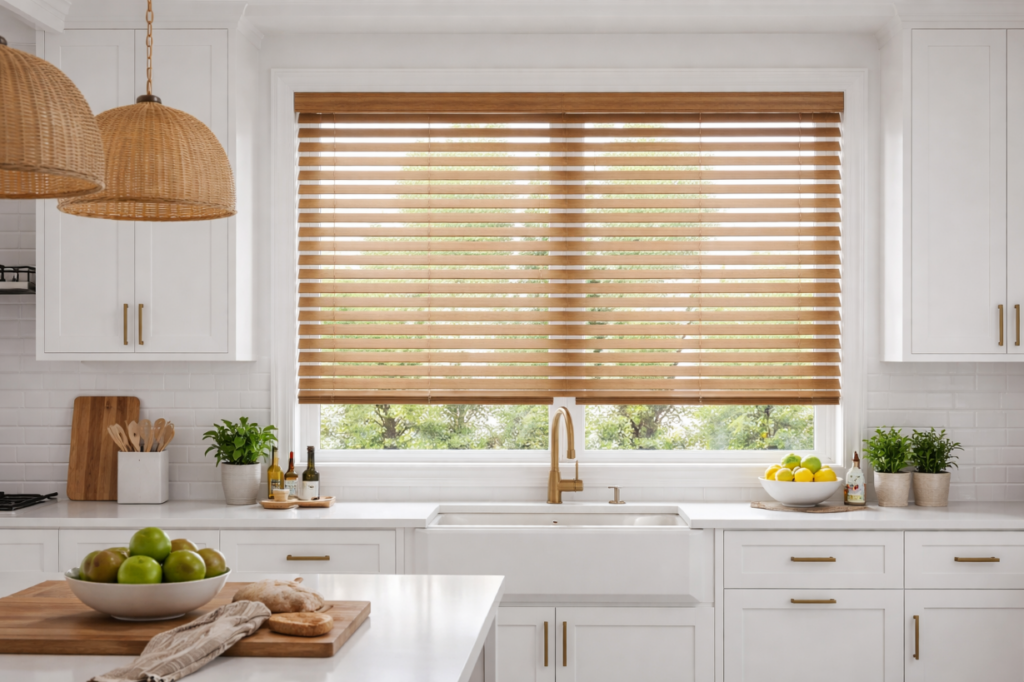
Why kitchen blinds matter
Kitchens are high-traffic, high-humidity spaces. Steam from cooking, grease, and frequent cleaning mean traditional window treatments for a living room may not hold up. The right kitchen blinds protect your privacy, control glare while you cook, help with insulation and energy savings, and are easy to maintain.
Energy experts (including resources from Energy.gov) note that properly chosen window shades and coverings can reduce heat loss and lower energy bills — an important benefit for kitchen windows that may be large or face the elements.
What to look for: key features for kitchen window blinds
- Moisture resistance: Materials that won’t warp, rot or discolor near steam and sinks (faux wood, vinyl, and moisture-treated fabrics).
- Easy cleaning: Smooth surfaces or washable fabrics that resist grease and are simple to wipe down.
- Light control: Options range from light filtering to room darkening and blackout blinds — choose based on glare at the sink or stove and desired privacy.
- Safety: Cordless or motorized operation improves child and pet safety.
- Durability: Hardware and finishes that stand up to frequent use and cleaning.
- Insulation: Cellular shades and other insulating window treatments can improve thermal performance.
Best types of kitchen blinds (and when to choose them)
Faux wood blinds
Faux wood blinds combine the look of wood with moisture-resistant composite or PVC materials. They’re an excellent choice near sinks and on windows that get splashes or humidity. They provide good light control and are easy to wipe clean.
Roller shades
Roller shades are simple, economical and available in a wide range of fabrics (light filtering to blackout). Choose washable or vinyl roller blinds for areas near the stove or sink. Roller shades can be motorized for convenience and are often easier to clean than pleated fabrics.
Honeycomb / Cellular shades
Cellular shades offer excellent insulation and can reduce energy loss through windows — useful for kitchens that face cold winds or get too much sunlight during the warmer months.
Solar shades
Solar shades reduce glare while preserving the view and blocking UV. Use them for windows where you want daylight but need to protect countertops and finishes from sun damage.
Roman shades
Roman shades add a soft, tailored look. This style works best if your window is not located close to a stove or sink. They add tremendous style to the space but can easily be stained. If the window is not located in a ideal spot, best to save roman shades for the dining room instead. Or, you can choose our Designer Luxe Roman Shades which are made from textured fabrics that may be easier to spot treat than traditional fabrics.
Shutters
Wood or composite shutters are robust, easy to wipe, and give strong light control and privacy. Composite shutters resist moisture better than real wood and can be a long-lasting investment. You can also simplify your life by choosing our No Drill shutters for easy installation.
Woven wood / bamboo shades
Woven shades bring natural texture but can be less suitable near high-moisture areas. They look great for a dining nook adjacent to the kitchen where humidity is lower.
Vertical blinds and panel track
Good for patio doors or large sliding windows in kitchen extensions, vertical blinds and modern panel track blinds are an excellent choice. Choose vinyl or fabric panels with washable options.
How to choose based on location in the kitchen
- Above the sink: Better to go with faux wood, vinyl, or washable roller blinds for easy cleaning and splash resistance.
- Near the stove: Avoid delicate fabrics. Consider faux wood or vinyl roller blinds. Ensure adequate clearance so blinds aren’t exposed to flames or extreme heat.
- Over a breakfast nook or dining area: You can introduce softer textures like roman shades or woven wood if ventilation keeps humidity low.
- Large south-facing window: Consider solar shades or light-filtering cellular shades to reduce glare and UV while maintaining natural light.
Cleaning and maintenance
Routine cleaning extends life and keeps blinds hygienic in the kitchen:
- Dust regularly with a microfiber cloth or vacuum brush attachment.
- Wipe faux wood and vinyl with a damp cloth and mild detergent for grease removal.
- Spot-clean roller and cellular shades as per fabric care instructions. Many roller blinds have washable or wipeable options.
- For fabric roman shades, spot treat gently. Always test on the back of the fabric before spot treating more visible stains and be careful to dab stains, not rub roughly.
Common Kitchen Blind FAQs
Q: What are the best blinds for kitchen windows?
A: Look for moisture-resistant, easy-to-clean materials: faux wood, vinyl roller blinds, or composite shutters. If insulation is a priority, consider cellular shades.
Q: Are faux wood blinds good for kitchens?
A: Yes — they mimic real wood without the moisture sensitivity, making them ideal for humid areas near sinks or dishwashers.
Q: What window treatments are safe near a kitchen stove?
A: Keep combustible fabrics away from open flames. Use faux wood or vinyl and ensure blinds are mounted with adequate clearance from burners.
Q: Should kitchen blinds be inside mount or outside mount?
A: Inside mount gives a streamlined look if your frame depth allows. Outside mount can hide uneven frames and provides better light blockage.
Q: Are cordless blinds better for kitchens?
A: Yes for safety and ease of cleaning — fewer places for grease to collect on cords and fewer hazards for children or pets. In addition, cords longer than 44cm (22cm loop) are no longer permitted in Canada for safety concerns. If you still have corded blinds, it would be highly recommended to upgrade to a cordless or motorized option.
Ordering Tips
- Order samples before committing — colors and textures can look different in kitchen light.
- Choose washable or coated fabrics for high-use kitchens to avoid grease staining.
- Combine treatments — e.g., a solar roller shade for daytime glare plus a roman shade for evening privacy — to get the best of light filtering and room darkening.
- If energy efficiency is important, prioritize cellular shades for exterior windows; they add insulating air pockets that reduce heat transfer.
Quick buying checklist
- Measure windows for inside/outside mount and note obstructions.
- Decide on material (faux wood, vinyl, fabric) based on moisture and cleaning needs.
- Choose light control level: light filtering, room darkening, or blackout blinds.
- Consider cordless or motorized operation for safety and convenience.
- Order samples and read care instructions before purchase.
Finally, if you have any questions, know that our customer service team is here to help. Feel free to contact us and our team will gladly walk you through the measuring, ordering, and installation process. What else would you like to know when it comes to selecting blinds for the kitchen? Share your thoughts with us in the comments below.