Imagine your patio staying cool on the hottest afternoons, your pergola being usable in wind or light rain, and your evening dinners free from glare and bugs. Outdoor blinds make that possible—extending living space, reducing cooling costs and creating a comfortable, private retreat. This guide walks you through types, materials, installation tips, maintenance, and how to choose outdoor blinds that function properly for your needs.

What are outdoor blinds?
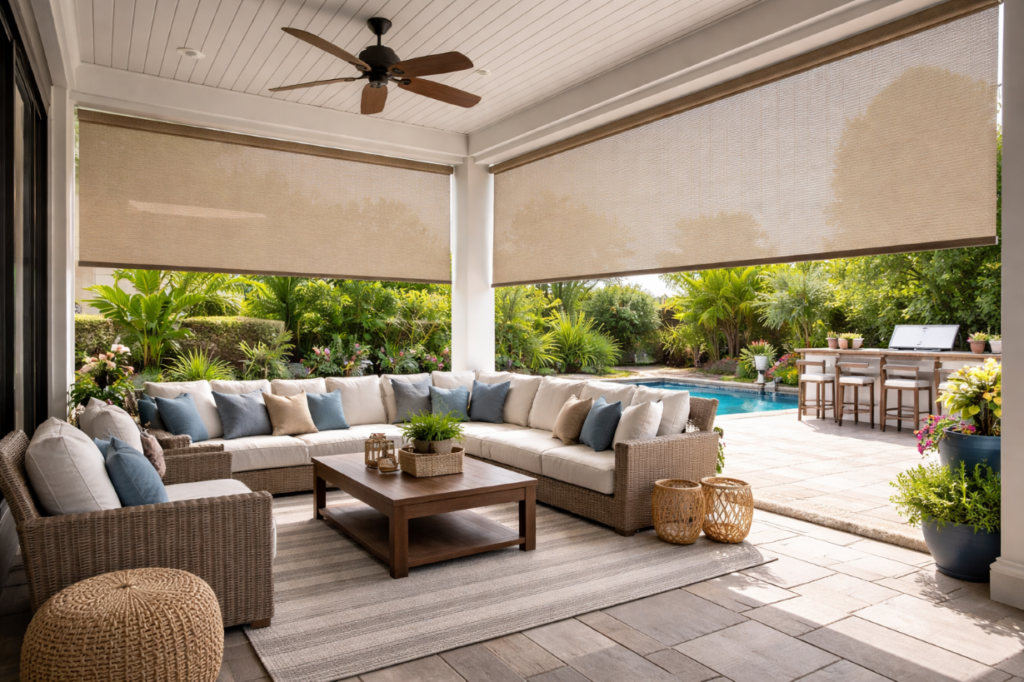
Outdoor blinds (sometimes called outdoor roller shades or patio shades) are exterior window coverings and screens made for patios, porches, pergolas, gazebos and exterior windows.
Outdoor roller shades / solar shades are made from mesh fabrics (1%–14% openness) that block sun and glare while preserving some view. The lower the openness percentage, the more heat and UV rays are blocked. A higher openness level will allow more light and sunshine to filter through, while still protecting you from too much UV infiltration.
Our outdoor shades collection are made from weather-resistant materials so you can leave them out all year round without worrying about rust. This is such an important factor that just can’t be overlooked in Canada.
Why outdoor blinds matter: benefits and key facts
- Sun protection & UV reduction: Many solar shades block 86%–99% of harmful UV rays, protecting furniture and reducing glare. (How much blockage you have will depend on the openness percentage you choose.)
- Thermal comfort & energy savings: Proper shading can lower indoor solar heat gain—industry estimates often cite indoor temperature reductions of several degrees (commonly 3–6°C / 5–10°F) and reduced AC runtime.
- Extended outdoor season: Windproof and waterproof options let you use a pergola or patio in cooler months and light rain.
- Privacy without full blackout: Mesh solar shades allow natural light and outward views while limiting visibility into your space.
- Durability: Outdoor-specific resistant fabric and PVC options resist fading, mildew and tearing better than indoor fabrics.
According to manufacturers and industry studies, selecting the right openness percentage and material is critical; a 1% openness fabric offers maximum glare reduction and privacy but less view-through, while 10%–14% maintains brightness and a clearer outside view.
How outdoor blinds work: fabrics, openness and hardware
Fabric types and openness
Solar shades are specified by “openness”—the percent of the fabric surface that is open mesh:
- 1% openness: best glare control and privacy, minimal natural light.
- 3%–5%: very good sun control with some view-through.
- 10%–14%: balanced light, reduced glare and good outward visibility.
Materials
Most durable outdoor blinds use polyester yarns with PVC or acrylic coatings. These resistant fabric constructions prevent moisture absorption and resist UV degradation. Clear PVC panels provide near-blackout and weatherproofing when needed.
Hardware and mounting
Proper brackets and tracks are essential so the system will function properly. Brackets must be rated for exterior use and spaced per manufacturer instructions. Motorized drives, crank rollers, and spring-operated rollers are common control options—motorization can enhance convenience and longevity.
Choosing the right outdoor blind for your space
Consider these factors:
- Location: Is it a wind-exposed pergola, a sheltered porch, or a restaurant patio? Zip systems and heavy-duty PVC work better in windy settings.
- Desired light & view: Select openness (1%–14%) to balance glare control and natural light.
- Operation: Manual (cordless, crank) or motorized (remote, app, or smart-home integration)? Motorized systems are ideal for larger spans.
- Aesthetics & materials: Polyester blends or PVC—pick what fits your décor.
Measuring & installation basics
Accurate measuring ensures blinds fit and perform. Here’s a brief overview of the key steps outlined in our Measuring Guide:
- Decide inside- or outside-mount.
- Measure width at three points; use the smallest measurement for inside mounts.
- Measure drop (length) and consider clearance for flooring or furniture.
- Choose bracket positions rated for exterior conditions—stainless or powder-coated steel is best.
- If motorized, plan electrical access for charging the motors periodically.
Maintenance, care and making them last
Simple maintenance extends lifespan:
- Regularly brush off dust and debris; hose down mesh shades with mild soap and water (avoid high-pressure washers).
- Lubricate tracks and check brackets seasonally.
- Secure or lower windproof blinds during storms—use tie-downs or clips where recommended.
- Store lightweight or delicate shades indoors during winter if manufacturer advises.
Common misconceptions & FAQs
Do outdoor blinds block all sunlight?
Not always. Solar shades reduce glare and UV but still allow natural light; only opaque PVC or curtain solutions provide full blackout.
Are outdoor blinds only for summer?
No. Windproof and insulated options help retain heat and protect outdoor furniture in cooler months—extending the outdoor season.
Will outdoor shades stop insects?
Outdoor shades can reduce flying insects but are not a complete insect barrier. However, we also recently launched custom window screens to solve this problem.
How do I keep outdoor shades from blowing?
We always recommend using the bottom clips to secure your blinds in place. Anchoring points and proper installation also make a big difference.
What happens if I measured incorrectly and my new outdoor blinds don’t fit?
Our Perfect Fit Guarantee is designed to take the stress out of ordering custom window coverings online. Because blinds are made to your exact measurements, a small error can normally be costly—but this guarantee offers a safety net.
If your blinds don’t fit due to a measuring mistake, we will remake them at no charge and we will help you remeasure them correctly. The remake typically must be for the same product and colour. It’s a one-time replacement policy that gives homeowners added confidence when measuring and ordering on their own.
Expert tips & best practices
- For pergolas, pair overhead louvres with side outdoor blinds to control both overhead sun and side glare.
- Order fabric samples and install a small test blind to assess color, transparency and heat reduction before committing to a full set.
- Install brackets into structural framing—screwing into fascia alone is often insufficient. Always follow the complete installation instructions.
- Combine exterior blinds with interior window coverings for layered insulation and improved seasonal comfort.
Are you planning to renovate your yard with outdoor shades this year?